

The Science Behind True Sage™
Built on more than 30 years of collaboration with Dr. Vincent J. Felitti, MD, co-principal investigator of the CDC–Kaiser Permanente Adverse Childhood Experiences (ACE) Study.
The True Sage™ approach is grounded in decades of research on how life experiences influence stress, health, behavior, and emotional well-being. Drawing from psychology, medicine, public health, and mind–body science, True Sage translates these insights into practical tools that support resilience and long-term well-being.
The ACE Study: A Foundation for Understanding Health
The Adverse Childhood Experiences (ACE) Study, conducted by Kaiser Permanente and the CDC, demonstrated that early life experiences—such as abuse, neglect, and household stress—are strongly associated with long-term health outcomes.
Higher ACE scores have been linked to increased risk for:
• depression and anxiety
• substance use and addiction
• cardiovascular disease
• obesity and diabetes
• chronic health conditions
(Felitti et al., 1998)
This research established a key insight:
health is shaped not only by biology, but by lived experience.
How Life Experiences Influence Health
Research following the ACE Study shows that both adverse and positive experiences shape patterns of stress, coping, and health across the lifespan.
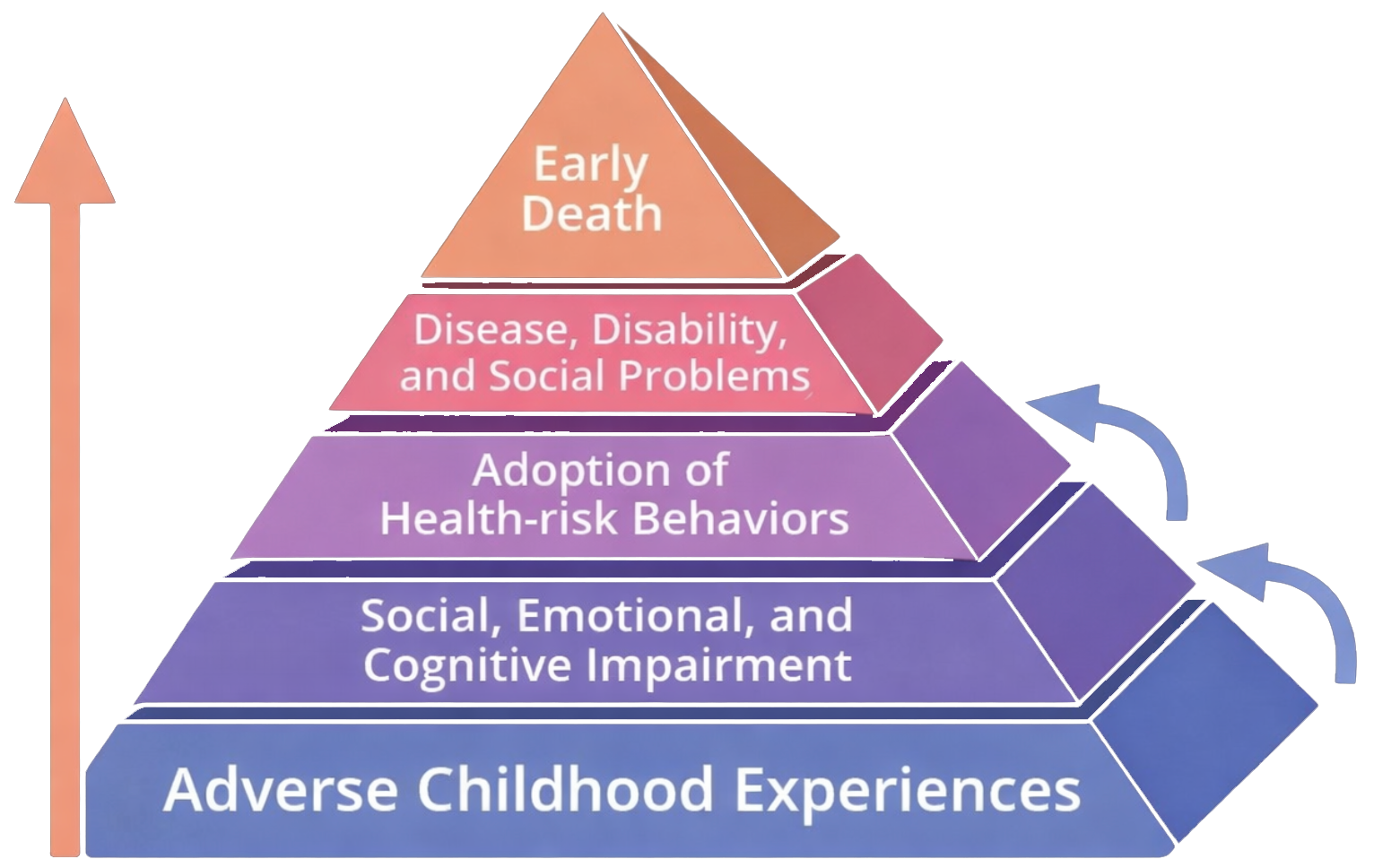
The ACE Pyramid illustrates how early experiences can influence:
• social and emotional development
• health behaviors
• disease risk
• quality of life
• life expectancy
Positive and supportive experiences can help buffer these effects and promote resilience.
(Bethell et al., 2019)
True Sage incorporates both perspectives—understanding adversity while strengthening protective factors.
Stress Patterns and Long-Term Health
Research in stress physiology suggests that outcomes are influenced not only by stressful events, but by how long stress responses remain active.
At True Sage, we use the term stress persistence to describe this pattern in practical terms.
Prolonged stress activation may contribute to:
• emotional reactivity
• difficulty recovering from stress
• long-term physiological strain
(McEwen, 1998)
The goal is to help individuals recognize and shift these patterns toward more adaptive responses.
Clinical Experience and Application
The True Sage approach is informed by both research and real-world application.
For more than three decades, Dr. Brian M. Alman, PhD, has worked with Dr. Vincent J. Felitti to translate ACE research into practical methods used in:
• healthcare settings
• educational programs
• workplace wellness initiatives
These approaches have supported thousands of individuals in understanding and changing long-standing stress patterns.
Mind–Body Regulation
A large body of research supports mind–body approaches for improving emotional regulation and reducing stress.
Common techniques include:
• guided relaxation
• breathing exercises
• focused attention
• self-hypnosis
• imagery and visualization
These methods help activate the body’s natural relaxation response and support emotional balance.
(Benson & Proctor)
A Trauma-Informed, Preventive Approach
Modern health research emphasizes trauma-informed and preventive care—focusing on underlying life experiences rather than symptoms alone.
This approach supports:
• greater self-awareness
• more compassionate understanding of behavior
• earlier intervention
• stronger resilience
Digital tools are expanding access to these methods at scale.
(White et al., 2024)
Translating Science Into Practice
True Sage helps individuals:
• understand how life experiences shape stress and behavior
• recognize patterns that may no longer be helpful
• develop healthier responses to challenges
• strengthen resilience and well-being
The enlightn™ Platform
These principles are delivered through the enlightn platform, which provides:
• guided mind–body practices
• educational content based on ACE and resilience research
• self-reflection tools
• practical techniques for emotional balance
enlightn makes these insights accessible for everyday use.
Scientific References
Felitti VJ, Anda RF, Nordenberg D, et al.
American Journal of Preventive Medicine, 1998.
Bethell C, et al.
JAMA Pediatrics, 2019.
McEwen BS.
New England Journal of Medicine, 1998.
Benson H, Proctor W.
Harvard Medical School.
White M, et al.
JMIR Pediatrics and Parenting, 2024.
Important note:
True Sage is designed to support stress management, resilience, and emotional well-being.
It is not a substitute for medical care, psychotherapy, or professional mental health treatment.